This article appears on Q2 2020 edition of the Afropolitan magazine.
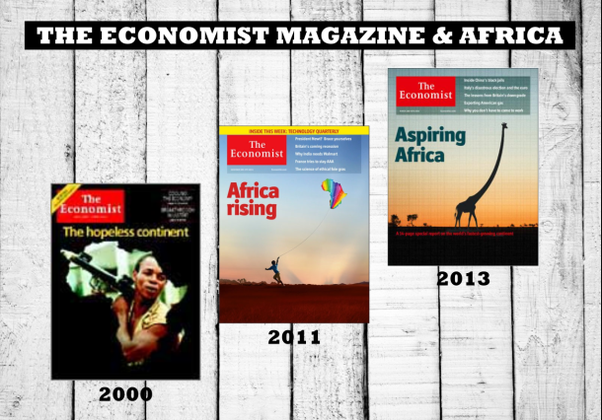
Two decades ago, the London weekly newspaper that is fashioned in magazine format, The Economist, published an insulting headline, describing Africa in pejorative language as a ‘Hopeless’ continent. In the subsequent decade, however, something had changed. Albeit a slight change, for the language was still patronising. In 2011, The Economist, after a decade of economic slow growth, said that ‘Africa (had) a real chance to follow in the footsteps of Asia.’ The headline, therein, was the popular sentiment of ‘Africa Rising.’
Language is a tool of exchange. Language can be used as a form of power and as an instrument to malign. On the other end, language can evoke pride in a people, for through it we move and find our being. In this third decade of the second millennium, the people of Africa must reclaim the language of their personhood, determining for themselves who they are and who they choose to be, and how others shall speak of Africa.
As professional media users, we will be in the forefront of this movement – locating Africa as the cradle of human development, not as ancient historical fossil data suggests but as the incremental development of the world suggests. It was the Bantu warriors of the ancient civilisation of Mapungubwe that traded with multi-locals from around the world. It was the Khoi who inscribed logic and knowledge on stone, forming a language of exchange and commerce, concretely inscribed for whoever encounters it to learn and propel the course of human knowledge production.
When Pixely Ka Isaka Seme rose to orate about the regeneration of Africa at Columbia University in April of 1906, and assert that ‘I am an African, and I set my pride in my race over against a hostile public opinion,’ Seme would have been inspired by the wealth of knowledge and power of the African people who came before him, giving him courage to set his pride in his people.
For our portion, as a generation that follows from Seme and others, we shall follow from Ayi Kwei Armah when he says that ‘we need to regain knowledge of ourselves, the something that we are. To do that we have first of all to end the addiction to the poisons that put us to sleep. Secondly, we need to cultivate healing values that will help us remake ourselves and then remake the universe.’
These poisons that put us to sleep, which we inflict on ourselves as media users, by joining the orgy of the pornography of war and destitution, by parading the hungry children with protruding stomachs from suffering Kwashiorkor. And the politicians, who for their part, strip us down from all sense of dignity by pillaging the national fiscus of their governments, making us the laughing stock of the world. We must say that the time is now to do as Armah admonishes us – end this addiction to self-repressive news and corruption.
Africa is not a sleeping giant, awaiting the colonial mother to raise it up from slumber. There are many innovative young Africans who are progressive, diverse, bending the trail of history toward Africa’s favour. We look to them as our lodestars when we curate the work we do at Kaya FM, we put their work on shopkaya.co.za and we engage with them through live poetry and jazz sessions on jazzuary.fm, and showcase their talents on our unplugged stage.
In this new decade, we will see a wave of the progressive and diverse Afropolitan woman who is not only gaining a higher discretionary spend and affording herself richer social experiences. She is also a community developer, in new ways. She is making her mark in social engineering, advocating that the world gives her male counterpart better tools to navigate the world and shun upon old traditional attitudes that make him harmful. She is also changing the cosmetic meaning of beauty, to a more practical and useful view of life. She is enchanted by Nomfundo Xaluva when she sings:
Ndimhle/
Ndiyintombi ene sidima/
Ndihambela phezulu
She is beautiful, dignified, and holds a good head on her shoulders. We see the world through her lense. And through her, we see a fairer and just world. This fair and just world, will rest on the humanist values and indigenous knowledge systems of the African. We return to these values and bring everyone along with us by using a new way of doing radio, through the audio-documentary series we call What Is Wrong with Groovin’ which broadcasts every Sunday from 2pm to 6pm.
We use What Is Wrong with Groovin’ and our entire product suite return to these values and change the language of power to push Africa forward because seemingly, our maturing democracy has replaced the apartheid legal edifice, however, the residual imprints of colonialism and apartheid manifest in the psyche of the populace. The democratic leaders, ironically, steal the resources of the people they sought to liberate. Businesses, on the other hand, still place products in the market with a slant towards affluent consumers – entrenching inequalities. The ordinary people, living in squalor, are still confined in the “locations” unable to mingle across racial lines and class segments. This situation presents existential psychological turmoil.
The creative industry, nonetheless, has the power to elevate the national consciousness onto a higher level and restore the power of a calibrated mind. Through creative audio-sensory elements, What Is Wrong With Groovin’ empowers the listener with critical information while entertaining in distinct style. Our listeners call it “a whole musical lecture on radio.” On the show, we resolve the unresolved by digging in the archives, we affirm the repressed esteem of the African, we provoke and raise prickly questions for the bureaucracy, and we nurture the arts through song, dance and poetry. For life must be lived. After all, What Is Wrong With Groovin’?
What Is Wrong with Groovin’ is a record composed by the trumpeter extraordinaire, Hugh Masekela.
***
Mohau Bosiu is Creative Head at Kaya FM.
 Mohau Bosiu